
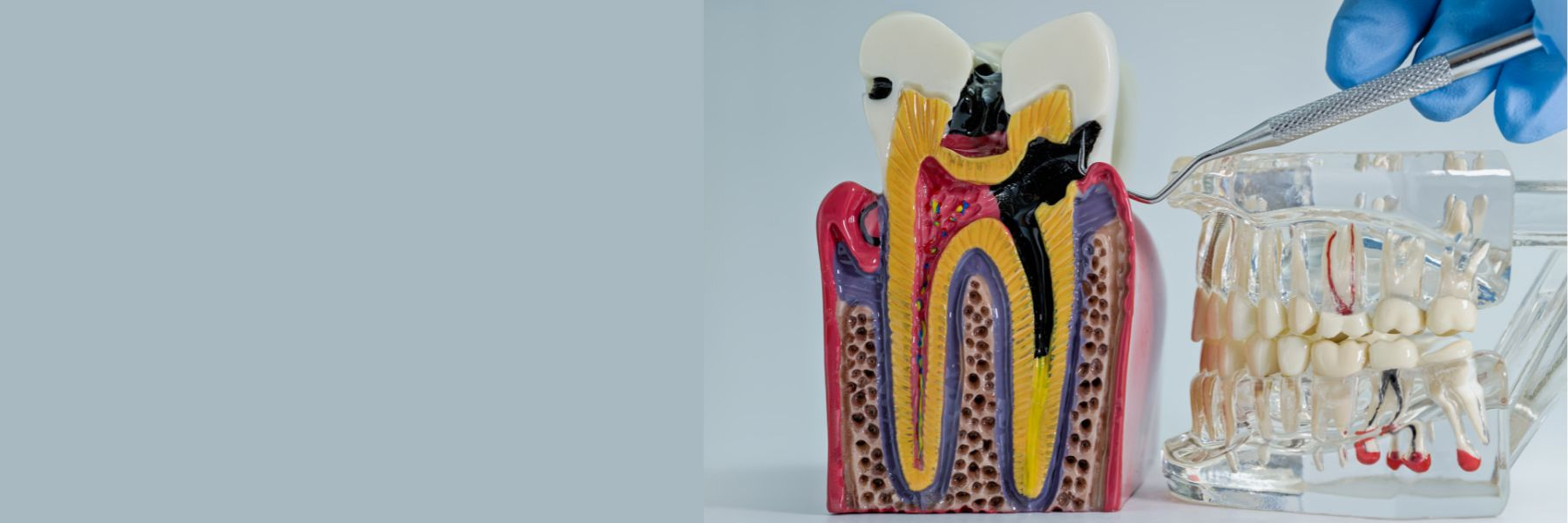

Steps in Root Canal Treatment

Treatment may take one or more appointments. Your dentist or endodontist will generally:
- Numb the area with local anesthetic
- Isolate the tooth to keep it clean and dry
- Create a small opening in the tooth
- Remove inflamed or infected pulp
- Shape, clean, and disinfect the canals
- Fill and seal the canals
- Place a temporary or final restoration
The tooth often needs a final filling or crown soon afterward. Back teeth commonly require crowns because they withstand greater chewing forces, while some front teeth may not. Your dentist will consider the tooth’s location and remaining structure.
After Root Canal Treatment
The tooth and surrounding tissues may feel tender for several days. Follow our instructions for eating, oral hygiene, and pain medication. Avoid chewing hard foods on a temporarily restored tooth until your dentist places the final restoration.
Contact us if you develop visible swelling, severe or persistent pain, an uneven bite, loss of the temporary restoration, or returning symptoms.
Protecting the Treated Tooth
Root canal treatment does not make a tooth immune to decay, fracture, or reinfection. Brush, clean between your teeth, attend recommended visits, and protect the final restoration. Some teeth may eventually need retreatment, endodontic surgery, or extraction.
Schedule an Evaluation
If tooth pain or swelling is disrupting your day, contact our office. We can identify the source and discuss whether root canal treatment may help preserve the tooth.